 |
|
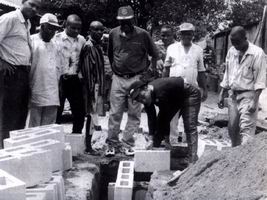
照片中顯示社會服務─扶輪四大服務的第三項—的實際運作情形。奈及利亞歐威里(Owerri)扶輪社為當地的「失母嬰兒之家」興建新的房舍 Community service, the third of Rotary’s four Avenues of Service, is shown here in action as the members of the Rotary Club of Owerri, Nigeria, build a new house for the local Motherless Babies Home. |
限據扶輪歷史記載,保羅•哈理斯在與一位同事走過芝加哥一個讓他想起童年親切小鎮生活的社區時,第一次產生成立社團的念頭。扶輪四大服務的理念也是產生自一次愉快的健行─這次是在1926年橫越英國東南部的蘇瑞山時。
According to Rotary history, Paul Harris was first inspired to form a club while walking with a colleague through a Chicago neighborhood that recalled the friendly small-town life of his boyhood. The idea for Rotary's four Avenues of Service also originated on a congenial hike - this time over the hills of Surrey in southeast England in 1926.
2名英國扶輪社員,席德尼•巴斯卡(Sydney Pascall)和薇薇安•卡持(Vivian Carter)提出所謂的「目標與宗旨計劃」(Aims and Objects Plan),其中包括4個推動扶輪服務的「管道」:社務服務、職業服務、社會服務、以及國際服務。這項計劃在於比利時歐斯登舉行的1927年國際扶輪年會中獲得通過。
Two British Rotarians, Sydney Pascall and Vivian Carter, developed what was called the Aims and Objects Plan, which included four "channels" for directing Rotary service: club service, vocational service, community service, and international service. The plan was accepted by the 1927 RI Convention in Ostend, Belgium.
這4個管道後來更名為「途徑」(avenue),而四大服務成為所有扶輪社規劃服務的指南。它們也成為扶輪宗旨的基礎。席德尼•巴斯卡後來成為1931-32年度國際扶輪社長。
The channels were later renamed avenues, and the four Avenues of Service became the roadmap for all clubs to follow in planning their service agendas. They also form the basis of the Object of Rotary. Sydney Pascall went on to become president of Rotary International in 1931-32.
照片中顯示社會服務─扶輪四大服務的第三項—的實際運作情形。奈及利亞歐威里(Owerri)扶輪社為當地的「失母嬰兒之家」興建新的房舍