|
|
|
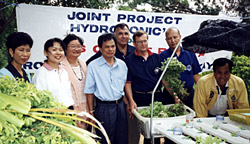
在泰國芭達雅,扶輪社員協助當地一所小學利用水耕法栽種蔬菜 In Pattaya, Thailand, Rotarians help a local school grow vegetables using the hydroponic method. |
藉著辦理計劃以保護和開發現有食物資源並改善營養狀況,扶輪社正幫助社區打擊貧窮,避免爆發危機。
By creating programs that protect and develop existing food resources and improve nutrition, Rotary clubs are helping communities battle hunger before it becomes a crisis.
以印度東北部為例,漁業經營不善和天然繁殖環境遭受破壞,早已致使河道豐富的當地面臨魚類資源枯竭殆盡的窘境。為此,高哈蒂南區(Gauhati South)扶輪社特地發起「藍色革命-搶救魚兒大作戰」(Blue Revolution-Project Grow More Fish)。
In northeast India, for example, poor management of fisheries and destruction of natural breeding grounds has resulted in a depletion of the fish population in the area's abundant waterways. To combat this problem, the Rotary Club of Gauhati South launched Blue Revolution — Project Grow More Fish.
這項全面性計劃是以教育及職業訓練為基礎。失業的農漁民學習如何興建與管理魚塭,來自當地大學的農產專家則不斷提供諮詢服務,讓當地居民有能力維繫生物鏈正常運作。
The cornerstone of this comprehensive project is education and vocational training. Unemployed farmers are taught how to build and manage fish farms, and agricultural experts from the local university provide ongoing consulting services so that local residents will be able to maintain an important link in their food chain.
在泰國,眼見芭達雅的佳沙美(Jug Samet)小學缺錢為貧苦學童供應營養均衡午餐,陶克辛-芭達雅(Taksin-Pattaya)扶輪社便透過一項水耕園藝計劃來改善學童的營養狀況。這種另類栽種方式只需富含養分的水,對土壤資源有限或遭受破壞的地區而言是絕佳的選擇。
In Thailand, where the Jug Samet School in Pattaya lacked the money to provide poor schoolchildren with balanced lunches, the Rotary Club of Taksin-Pattaya improved nutrition for the children with a hydroponic gardening project. This alternative growing method relies on water fortified with nutrients and is an excellent choice for areas with limited or compromised soil resources.
結合好農夫水耕股份有限公司(Good Farmers Hydroponics Company, Ltd.)的力量,陶克辛-芭達雅扶輪社已經和學童親手栽種出96種蔬菜植物。該社將持續監控這項計劃,以決定其他偏遠學校能否比照辦理。
Teaming up with Good Farmers Hydroponics Company, Ltd., the Taksin-Pattaya club worked directly with the schoolchildren to grow 96 vegetable plants. The club will continue to monitor this project to determine if it can be implemented in other rural schools.