|
再聯繫 通訊 (心繫扶輪)2010年 10月發行
|
|||
被星星感動
Star struck
By Maureen Vaught
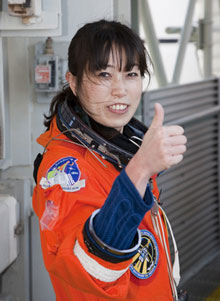
即使作為一個小孩子,日本太空人和前扶輪基金大使獎學生Naoko
Yamazaki皆可發現迷人的外太空。從位於在東京市郊松戶的家,她花了好幾個夜晚觀察星象。當她長大了,舉凡電影星際大戰和電視節目中發射太空船的畫面均會引發她對太空世界的好奇也使得其興趣越來越濃厚。
Even as a small child, Japanese astronaut and former Rotary Foundation
Ambassadorial Scholar Naoko Yamazaki found outer space fascinating. From
her home in Matsudo City outside Tokyo, she spent evenings stargazing.
As she grew older, movies like
Star
Wars and TV broadcasts of shuttle launches fueled her
growing interest.
“基於這些節目,我認為我們都可以去外太空,”已是日本第二位太空人的Yamazaki說。
“Based
on these shows, I assumed we would all go to space,” says Yamazaki, who
is only the second Japanese woman to become an astronaut.
Yamazaki在發現號太空船已經是一位具有超過360小時飛行時數的太空人。今年四月,她在STS
- 131發現號的補給任務國際太空站中擔任任務專家。此行對Yamazaki來說別具有意義。
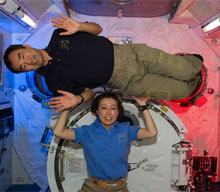
Yamazaki has logged more than 360 hours in space as a crew member on the
space shuttle
Discovery . In April, she served as mission specialist on
the STS-131
Discovery ’s resupply mission to the International Space
Station. The trip held special meaning for Yamazaki.
“我是計畫團隊的一部分,用以開發太空站,”她說。“此事令人印象非常深刻,尤其是當你想到超過十五個國家,其中還包含日本和美國都一起來協助建立它。”
“I
was part of the project team that developed the space station,” she
says. “It’s very impressive, especially when you consider more than 15
countries, including Japan and the United States, helped build it.”
國際扶輪的工作機會對於1994-95年度獎學生Yamazaki來說,有助於她在職涯規劃的選擇。她曾在美國馬里蘭州的馬里蘭大學學院公園主修太空機器人學,這是由日本千葉縣的Matsudo
Chuoh扶輪社所贊助的獎學金。她與來自世界各地的學生一起學習,她驚訝地發現,他們比她更了解日本和日本文化。過去的經歷告訴她,身為一名太空人,不僅是自己的國家,也要站在一個客觀的角度來看待與工作有關係的每件事。
The chance to work on international projects as a 1994-95 Rotary Scholar
contributed to Yamazaki’s career choice. She studied space robotics at
the University of Maryland in College Park, Maryland, USA, sponsored by
the Rotary Club of Matsudo Chuoh, Chiba, Japan. Working with students
from around the world, she was surprised to learn that they knew more
about Japan and Japanese culture than she did. The experience taught her
more about not only her own country but also the value of an objective
viewpoint, which she believes is relevant in her work as an astronaut.
“透過從遠處觀看,你可以透過學習學到更多關於地球的知識,”她說。
“You
can learn so much more about the earth by studying it from a distance,”
she says.
在她獎學金的年度,Yamazaki說,她也學會了溝通技巧的重要性,以及工作的事前準備和團隊精神。1996年,她在日本國家太空發展辦事處開始了她的航空事業,這些過去學到的技能幫助她獲益匪淺。(今稱為日本宇宙航空研究開發機構)。
During her scholarship year, Yamazaki says, she also learned the
importance of communication skills, preparation, and teamwork. These
skills served her well when she began her aeronautical career in 1996 at
the National Space Development Agency of Japan (now called Japan
Aerospace Exploration Agency).
“在太空計劃,溝通能力是分享訊息與工作效率的關鍵。此道理與當你出國留學,特別是你想要試著用外語與人進行溝通時的意義是相同,“Yamazaki說。
“In
the space program, communication is key to sharing information and
working efficiently. It’s the same when you’re studying abroad,
especially when you’re trying to communicate in a foreign language,”
Yamazaki says.
她的太空飛行花了將近十年的時間準備,其中包括在加拿大、日本、俄羅斯和美國的培訓。完成基本訓練後,她去俄羅斯用七個月的時間取得作為俄羅斯Soyuz太空船飛行工程師的資格。
Preparing for her space flight took nearly 10 years and included
training in Canada, Japan, Russia, and the United States. After
finishing basic training, she went to Russia for seven months to qualify
as a flight engineer on the Russian Soyuz spacecraft.
自她返回地球,Yamazaki一直參與飛行之後的活動,包括拜訪美國太空總署中心,參加技術會議探討天體運行軌道的議題,並參加公共關係工作。
Since her return to Earth, Yamazaki has been involved in postflight
activities, including visiting NASA centers, participating in technical
meetings to discuss the orbit, and taking part in public relations work.
“國際太空站將運作至2020年,所以我希望我有機會可以再回去,”她說。
“The
space station will operate until 2020, so I hope I get a chance to
return,” she says.
與此同時,Yamazaki在地面將繼續支持其他特派任務和國際太空站。而當她在空閒時,她會花時間與家人看她最喜歡的電影系列,星際大戰。
In the meantime, Yamazaki will continue to support other missions and
the space station from the ground. And when she gets a spare moment,
she’ll spend time with her family watching her favorite film series,
Star
Wars. |
|||
|