|
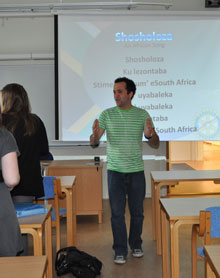
南非籍的Damian
Lahoud對於該國愛滋孤兒現在及未來的福祉深感憂心。
South African Damian Lahoud is deeply
concerned about the welfare of AIDS
orphans in his country, now and in the
years to come.
Lahoud是扶輪基金會2009-10年的大使獎學生,他說:「愛滋孤兒的人數穩定成長,短短幾年內,將達到三百萬人。」「養育這些兒童的艱鉅任務,就落在goGoGetters身上(南非語「奶奶」的意思)。這些奶奶們跟這些兒童可能沒有血緣關係,但卻將他們視如己出,有的一次照顧了20位兒童。她們提供保護和支持,並鼓勵兒童上學。」
“The
number is steadily rising, and within a
few short years there will be close to
three million,” says Lahoud, a 2009-10
Rotary Foundation Ambassadorial Scholar.
“The difficult task of raising these
children has fallen to the goGoGetters
[a South African term for grandmother].
These goGos might not even be related to
the children, but they have taken it
upon themselves to look after [them],
most taking care of up to 20 at a time.
They provide protection and support and
encourage these children to go to
school.”
愛滋孤兒所處的困境,使Lahoud在瑞典林克平大學就讀的受獎期間,進行一項募款計畫。該計畫的主旨為提升大眾對於南非愛滋病及goGoGetters照顧孤兒角色之意識,並且募款協助他的贊助社Knysna扶輪社來協助當地社區的goGoGetters。
The plight of AIDS orphans led Lahoud to
carry out a fundraising project during
his scholarship year at Link螌ping
University in Sweden. The project’s main
goals were to increase awareness of AIDS
in South Africa
and the goGoGetters’ role in caring for
the orphans, and to raise funds to help
his sponsor, the Rotary Club of Knysna,
support goGoGetters in the local
community.
該校學生有一項傳統,會穿著連身工作服,上面展示了他們所參加各種聚會的徽章。Lahoud透過販售特別的愛滋意識徽章「ImPATCHits」,每個售價2.75美元,淨募得款項總計有6,000美元。
The university’s students have a
tradition of wearing overalls that
display patches of various gatherings
they have attended. Lahoud’s fundraiser
netted US$6,000 through the sale of
special AIDS awareness “ImPATCHits” for
about $2.75 each.
「我在校園販售徽章,並在瑞典各個扶輪社推展這項計畫,也向扶輪社友兜售非洲的串珠飾品。」Lahoud說:「每個徽章都可以發揮巨大的效益,幫助一個兒童一個月的生活費。」
“I
spent time on campus selling patches and
promoting the project at Rotary clubs
throughout Sweden, selling African
beadwork ribbons to Rotarians,” Lahoud
says. “A single patch can go a long way
by helping one child for one month!”
2007-08年來自日本的扶輪受獎人Natsuko
Sawaya,她跟Lahoud擁有一樣的熱情來協助處於危險中的兒童。她在賽內加爾姆布爾(Mbour)的一個中心工作,裡面住了160名兒童。有100位都不到一歲。義大利Bologna-Est扶輪社和其他波隆那四個扶輪社都向她提供協助。
Natsuko Sawaya, a 2007-08 Rotary Scholar
from Japan, shares Lahoud’s passion for
helping kids at risk. She works at a
center in Mbour, Senegal, where 160
children live, more than 100 of them
less than a year old. The Rotary Club of
Bologna-Est, Italy, and four other clubs
in Bologna have helped support her
efforts there.
Sawaya是在義大利讀書的扶輪受獎人,她說:「我在幾個月大的嬰兒身上,就可以看出哪些已經患有收容症候群和缺乏母愛。」「我和一位心理學家一起改善母親照護的品質。該中心現在正在設立給嬰兒的新設施,我希望能幫助這個地方提供更好的收容照護。」
“I
could see among the ones who were only a
couple of months old the symptoms of
institutionalization and maternal
deprivation,” says Sawaya, who studied
as a Rotary Scholar in Italy. “I worked
with a psychologist to improve the
quality of maternal care. The center is
now building a new facility for babies.
I’d like to help make the place better
for institutional care.”
在中心開張後,Sawaya計畫要到辛巴威的孤兒院工作。她期盼最終能成為扶輪和平獎學金受獎人。
After the center opens, Sawaya is
planning to work at an orphanage in
Zimbabwe. Eventually, she would like
to study as a Rotary Peace Fellow.
Sawaya說:「無論我身在何方,扶輪為我、為兒童、為人民所付出的貢獻,都是無與倫比。」「我和全世界的扶輪社友保持聯繫,也獲得了許多絕佳的機會。」
“It’s
really unbelievable what Rotarians are
trying to do for me, for kids, for
people everywhere I go,” Sawaya says.
“I’m still connected with Rotarians
around the world and receiving such
wonderful opportunities.”
母親與兒童健康是未來願景計畫(Future
Vision Plan)的一大重點。為期三年的未來願景計畫將從7月1日開始,到2013年6月30日結束。
Maternal and child health is one of the
areas of focus of the
Future Vision
Plan. The three-year
Future Vision
pilot began 1 July and
continues until 30 June 2013.
|