|
 〝當我們在討論人們時,我們應該不要考慮政治的利害關係。〞 〝當我們在討論人們時,我們應該不要考慮政治的利害關係。〞
-勒佩斯•阿如面迪
“[Conflict prevention] goes beyond political
interests. We’re talking about people.”
– Sebastian López Azumendi
|
|
|
|
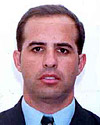
勒佩斯•阿如面迪Lopez
Azumendi,一位第二屆扶輪世界和平獎學生,深信一個政府或機構的開發計劃應該涵蓋預防衝突發生的策略。 |
Sebastian López Azumendi, a member of the second class of Rotary
World Peace Fellows, believes a government’s or organization’s
development plans should include strategies to prevent
conflicts. |
|
〝衝突和開發是一種新的領域,因此我們需要很努力去說服制定政策的人讓他們了解其重要性,〞在一場於八月份在芝加哥為基金會前受獎人資源小組(FARG)所舉辦的訓練會議上,阿根廷人說〝當我們在討論人們時,我們應該不要考慮政治的利害關係而要專注於他們的需求,我們要思考的是開發的政策〞。開發政策包含如何努力以減少貧窮、增加貿易和改善健康及教育。勒佩斯說如果制定的政策不考量潛在的衝突危機時不穩定政局可能爆發,他舉例說一個民營化的計劃如果不考慮對工人的衝擊,如工人被開除或可能變換工作性質時可能產生社會及政局的不安,特別是在當地業已缺乏基礎建設以安置這些居民。 |
“Conflict
and development is a new field, so we need to work hard to
convince policymakers of [its] importance,” the Argentine native
said during an August training meeting in the Chicago area for
the Foundation Alumni Resource Group (FARG). “It goes beyond
political interests. We’re talking about people, about [being
sensitive to] their needs. That has to be taken into account
when considering development policies.” Development policies
include efforts to reduce poverty, increase trade, and improve
health and education. López said instability can erupt if such
policies don’t take potential conflicts into account. For
example, he says, a privatization project that doesn’t consider
its impact on workers who may be fired and possibly displaced
could produce social and political instability in an area that
already lacks the infrastructure to accommodate these new
residents. |
|
〝諸如波利維亞事件,當地國營事業民營化後,工人被安置於非正式經濟區時,如古柯COCA栽培(古柯葉用來提煉古柯鹼),因此增加非法活動及伴隨而來的危機,〞他說道。 |
“Such
was the case of Bolivia, where the privatization of state-owned
enterprises[caused] workers to be relocated to informal areas of
the economy, such as coca cultivation [the coca leaf is used to
make cocaine], increasing the risks of illegal activities and
their accompanying consequences,” he says. |
|
勒佩斯今年五月畢業於北卡羅來納的杜克大學Duke
University獲得國際開發政策之碩士學位,並且是位專長於和平及解決衝突方面,他是位在美國北卡羅萊納州教堂山,公爵大學及北卡羅萊納大學扶輪國際研究中心的獎學生。 |
López graduated from Duke University in North Carolina, USA, in
May with a master’s degree in international development policy
and a specialization in peace and conflict resolution. He was a
Rotary World Peace Fellow at the Rotary Center for International
Studies program at Duke University and the University of North
Carolina at Chapel Hill. |
|
在他的碩士論文中,勒佩斯研擬了一套逐步的方針以分析衝突及機構之政策。他開創了分析的工具用以處理美洲國家組織(OAS)之危機,主要針對被波利維亞、厄瓜多爾、秘魯。但勒佩斯強調他的步驟能適用於任何機構以解決衝突。 |
For his master’s project, López developed a step-by-step guide
to analyze conflicts and organizations’ policies. He created the
analysis tool with the idea that the Organization of American
States (OAS) could use it to solve crises, mainly in Bolivia,
Ecuador, and Peru. But López says his steps can be applied by
any organization that works with conflicts. |
|
在他訪問芝加哥區域於基金會前受獎人資源小組會議演講時,勒佩斯解釋他的指南是如何的運作。〝一個國際機構要專注於衝突的歷史演變、利益團體、以及國內和國際當局的反應、衝突的原因(經濟的、社會的或政治的)、和來源、利益團體和反應間的互動,〞勒佩斯強調。〝在這部份分析完成後,那麼短期、中期及長期的計劃將陸續完成,因此該機構的因應計劃便告完成。〞 |
During his visit to the Chicago area to speak at the FARG
meeting, López explained how his guide works. “An international
organization focuses on the history of the conflict, the
stakeholders, the responses from national and international
authorities, the causes of the conflict (economic, social, or
political), and the interaction among the sources, stakeholders,
and responses,” says López. “After this part of the analysis is
complete, different scenarios for the short, medium, and long
term are established, and the responses of the organization are
planned.” |
|
在他的計劃之外,勒佩斯現在住在華盛頓,他將獻身於扶輪世界和平獎學生的工作,以喚起大家的注意。 |
Along with promoting his project, López, who now resides in
Washington, D.C., is committed to raising awareness of the work
being accomplished by Rotary World Peace Fellows. |
|
〝我認為建立並開發主導完成和平與解決衝突計劃的不同利益團體制度化的聯繫是很重要的一件事情,〞勒佩斯說。 |
“I think it’s important [for the program] to build and develop
institutional links with the different stakeholders who are in
charge of implementing peace and conflict resolution projects,”
says López.
– M.V |
